

The First Day of the Lower Silesian Congress of National Remembrance Has Come to an End
The Lower Silesian Congress of National Remembrance, organised by the Wrocław Branch of the Institute of National Remembrance (IPN), began on 21 September. The event is being held at the Centennial Hall and is attracting a wide range of visitors – from children and young people to adults and seniors. The Congress lasts two days.
“History Speaks Across Generations”
The Congress is a unique meeting place for science, education and culture. This exceptional event is aimed at people of all ages. Its purpose is to present the recent history of Poland in an engaging and diverse way – through educational games, multimedia exhibitions, panel discussions, workshops, performances and historical reenactments. It is a journey through history that speaks both to those who remember the events of the 20th century and to young people who use modern technologies and learn through multimedia, play and creative workshops.
The programme includes, among other things, LEGO building activities and a tournament, a zone telling the story of Wrocław’s dwarfs, and the New Technology Zone. The Congress of National Remembrance is a response to the findings of social research commissioned by the IPN, which demonstrated the need to present the history of Poland in a broader and more accessible way.
“History Speaks Across Generations” is the theme under which the Wrocław Branch of the Institute of National Remembrance invites visitors to the Lower Silesian Congress of National Remembrance, held on 21–22 September 2026 at the Centennial Hall in Wrocław.
History Education in a New Format
The Congress of National Remembrance is not a conventional academic conference. It is a multidimensional event that uses diverse and unconventional ways of telling the story of the past to encourage visitors to reflect on events unfolding today. Participants encounter history through experience, conversation and play.
The First Day of the Lower Silesian Congress of National Remembrance
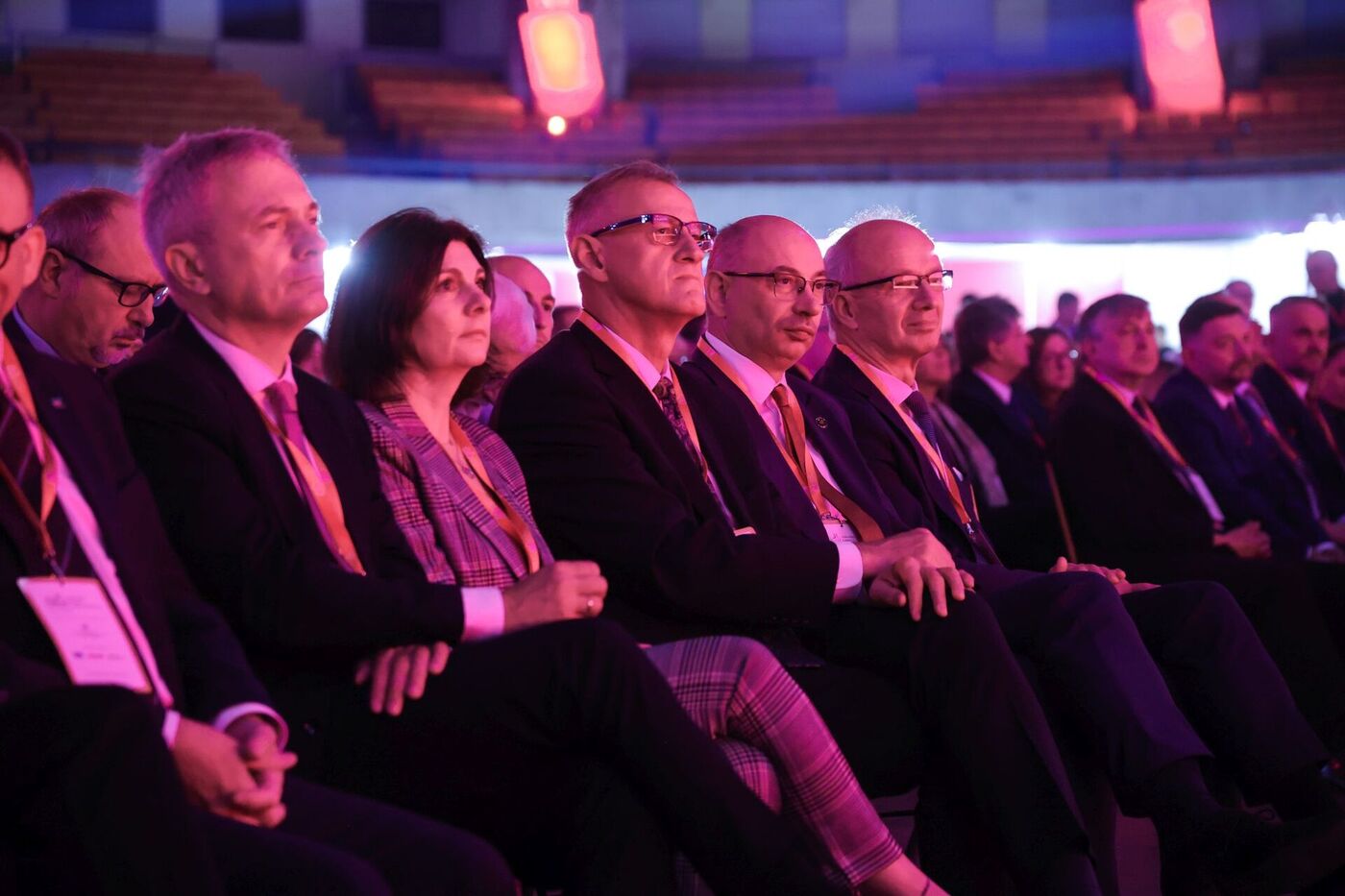
The ceremonial opening of the Congress was attended by, among others, IPN Deputy Presidents Dr Mateusz Szpytma and Dr hab. Krzysztof Szwagrzyk; Prof. Dr hab. Tadeusz Wolsza, Chairman of the IPN College; members of parliament; representatives of state and local government authorities, the diplomatic corps, uniformed services, academic, museum, archival, cultural and social institutions; as well as members of the clergy, veterans, Siberians and representatives of communities dedicated to preserving the memory of Poland’s recent history.
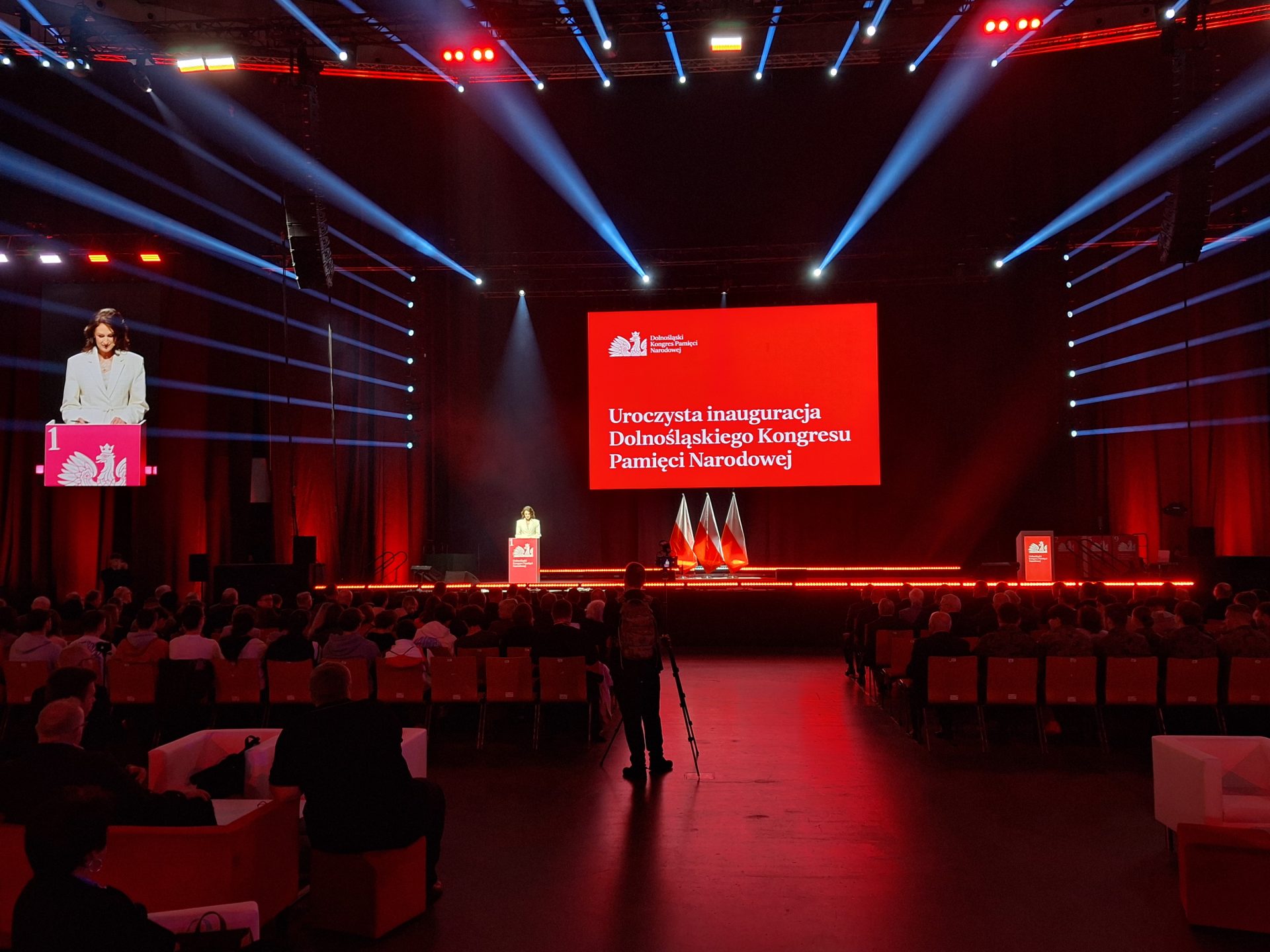
The official opening took place at 10 a.m. The event began alongside lectures for school students, workshops in the New Technology Zone and performances for children. From that moment on, there was hardly a moment in the Centennial Hall without educational activities, panels or workshops taking place.
The inauguration was hosted by Joanna Dzieniszewska. Following the initial welcome, Dr hab. Kamil Dworaczek, Director of the Wrocław Branch of the IPN, addressed the guests. He highlighted the process through which the region’s post-war identity was formed, as well as the process of reclaiming and restoring the truth about its history that has been underway since 1989:
Today, historians agree that the more accurate term is to speak of the “recovered lands”, with the emphasis placed on the process itself. What does this process involve? First and foremost, it involves building a community and an identity among the people of Lower Silesia and Wrocław. Let us remember that after 1945, everyone here came from somewhere else. People arrived from different parts of Poland and even from across Europe. Secondly, it involved becoming accustomed to what was unfamiliar – to what Poles found here in 1945. For the past 35 years, since the establishment of a free Republic of Poland, we have been able to speak of yet another process: the recovery of history and the restoration of historical truth – something that is particularly important for the people of our region. After all, following 1945, families of those murdered in Katyn came here, as did survivors of the genocide in Volhynia and soldiers of the Home Army. Those fleeing the communist apparatus of repression also arrived here, seeking refuge. Here, they built a second identity for themselves. For 26 years, the Wrocław Branch of the Institute of National Remembrance has also been part of this process of reclaiming Lower Silesia and recovering its history.
In a letter addressed to the participants of the Congress and read by Beata Kempa, Adviser to the President of the Republic of Poland, President Karol Nawrocki stressed the importance of successive editions of the event in popularising Polish history and bringing the work of the Institute of National Remembrance closer to the public:
Successive editions of the Congress of National Remembrance make it possible to present Polish history in all its richness and complexity. I initiated this event as President of the Institute of National Remembrance, and today I can proudly say that it is developing dynamically and producing wonderful results. It also gives a broad audience an opportunity to learn about the work of the Institute. Thanks to this initiative, thousands of participants can see the work of IPN experts up close, appreciate it and engage with them directly.
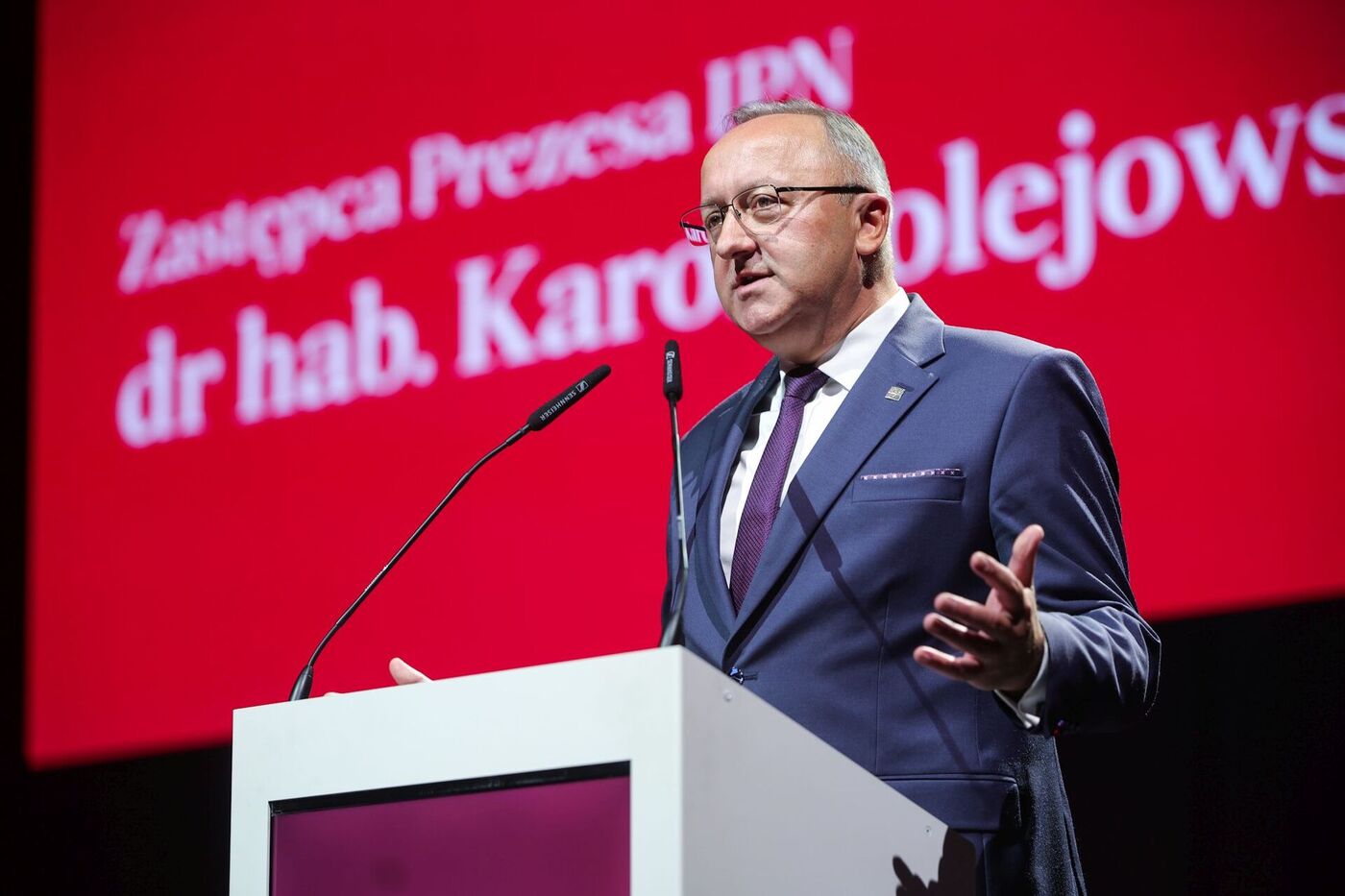
A particular focus of Dr hab. Karol Polejowski’s address was the role of the younger generation and the importance of history education in shaping informed citizens.
One of the fathers of Polish independence, Wincenty Witos, said something even before Poland regained its independence that remains just as relevant today. Every young Pole who finishes school should be well educated. They should know geography, history, biology and the other subjects they have studied. Yet the most important thing, the most important task of a school, is for a student to leave it as a Pole – as a person aware of their history and traditions – and to build their entire life upon that foundation. Young friends – before long, the fate of the Republic of Poland will be in your hands!
History is not confined to textbooks, archives and museum displays. It lives on in family stories, photographs, objects, memorial sites and the memories of witnesses. It can be a fascinating adventure, an experience engaging all the senses, and an opportunity to spend time together.
New Technology Zone
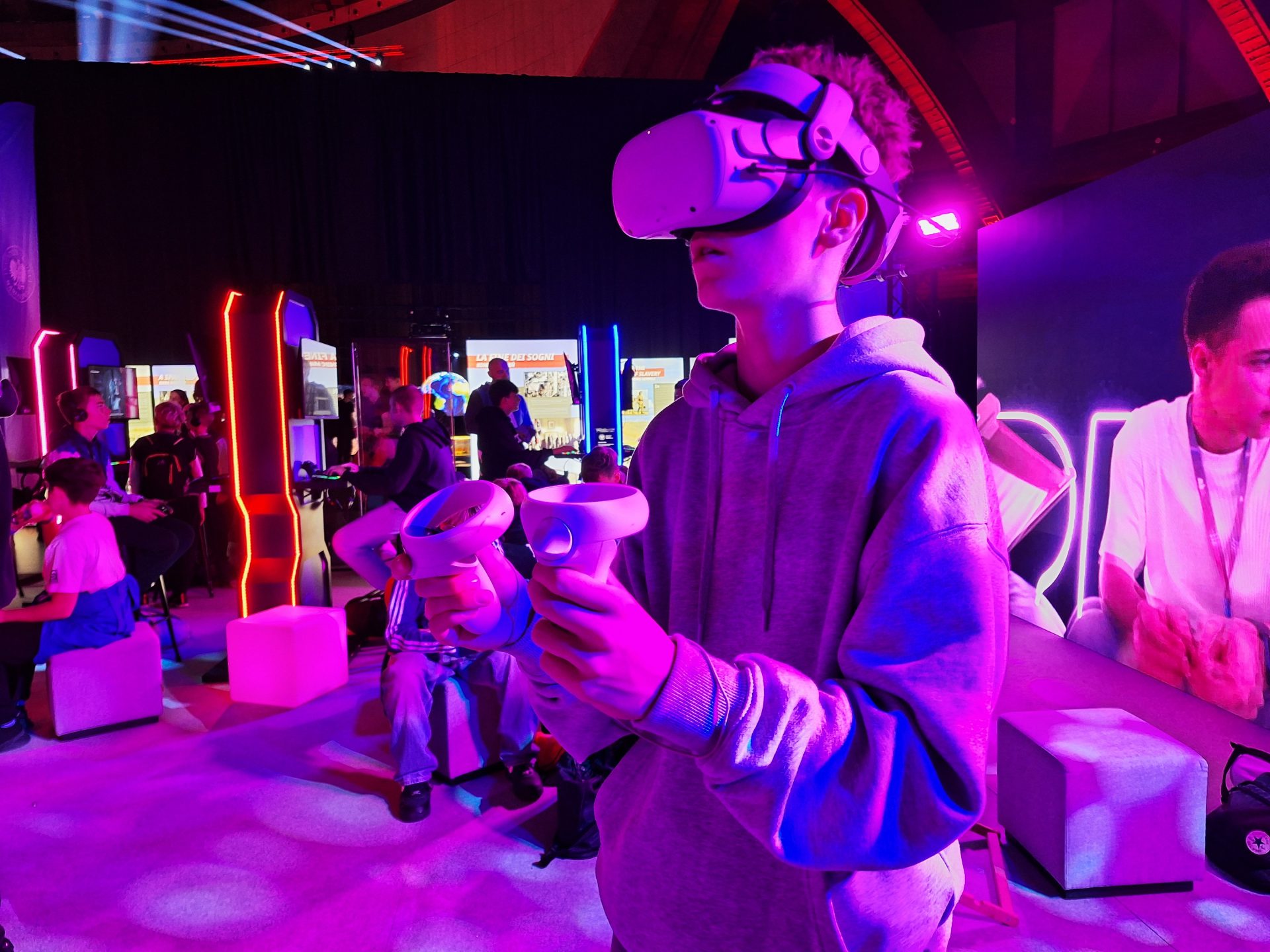
The New Technology Zone is available on site and has been drawing large crowds of school students since the very first minutes of the event. The Zone features all the projects developed by the New Technology Division – games, films and applications for both PC and VR (virtual reality). The virtual reality projects attracted an extraordinary level of interest, far beyond our expectations, with Aviators proving particularly popular.
We would like to thank all visitors for their warmth, smiles and inspiring conversations. Special thanks go to the young people who patiently waited in line for the VR stations.
The New Technology Zone is an ideal place to discover the concept of immersive history education and explore the possibilities of learning through new technologies. We invite everyone attending the Congress to visit the Zone on the second day of the event.
The Second Day of the Congress of National Remembrance Lies Ahead
The second and final day of the Congress will also offer a wealth of attractions. The programme includes, among other things, the panel discussion “What Kind of Historical Policy Do We Need? Between Building Community and the War Over Memory – A Regional and International Perspective” and the children’s performance Wojtek the Bear. Visitors will also be able to take part in further film workshops, educational theatre performances and panel discussions, as well as visit the New Technology Zone.